
The Journal
·
·
Kazzate
Cross Border Geological Hazards and Disaster Mitigation at Trans Himalayan Trade Corridors
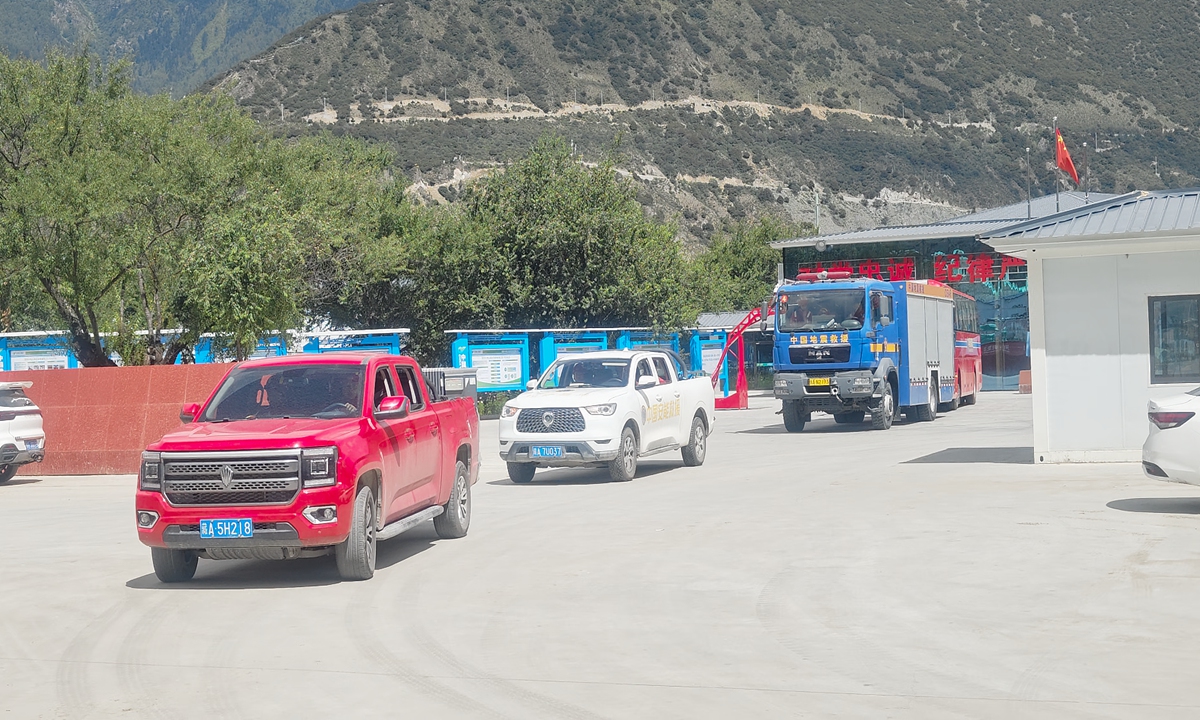
The immediate activation of a Level I emergency response by the regional command department in Xizang—complemented by a Level II national emergency response activated by the National Commission for Disaster Prevention, Reduction and Relief alongside the Ministry of Emergency Management—underscores the severe operational and human toll of trans-boundary natural hazards. Triggered by a massive mudslide occurring on the Nepal side of the border near Gyirong Port in Gyirong County, Xigaze, around 10:30 am on August 26, 2026, the disaster inflicted major casualties and left multiple individuals unaccounted for across a critical overland trade node. In complex mountain topography where steep gradients, high soil saturation, and unstable geology intersect, a single localized slope failure can immediately jeopardize cross-border commercial links, regional border security, and human life.
Managing geological disasters of this magnitude in high-altitude environments presents extraordinary engineering, medical, and tactical hurdles. The deployment of specialized heavy engineering forces, such as units from China Anneng, highlights the necessity of mobilizing specialized heavy machinery capable of operating at elevations well above 3,000 meters. Emergency response protocols at this highest operational tier mandate a multi-pronged approach: executing rapid search-and-rescue sweeps, establishing field medical triage to treat trauma patients within the critical 24-hour golden window, and coordinating the immediate evacuation and temporary resettlement of affected border residents. Furthermore, the risk of secondary hazards remains exceptionally high. Mass-wasting events frequently dam mountain watercourses, creating unstable barrier lakes that threaten downstream infrastructure with catastrophic flash flooding if breach pressures exceed structural limits. As detailed in coverage by People's Daily, maintaining real-time hydrological monitoring and deploying early warning sensor arrays are indispensable components of active disaster containment.
From an international trade and logistics perspective, Gyirong Port functions as a primary commercial gateway connecting China and Nepal, carrying a significant volume of annual overland freight, agricultural commodities, and manufactured goods. Suspending border gate operations during emergency response cycles inflicts direct financial losses on logistics carriers, increases container demurrage fees, and disrupts cross-border supply networks. To mitigate long-term vulnerability along the Trans-Himalayan economic corridor, future investments must focus on expanding joint bi-national disaster warning systems, installing slope-stabilization geogrids and automated displacement sensors along vulnerable access roads, and constructing reinforced debris-flow deflection barriers. Building structural resilience into border transit hubs ensures that critical international trade arterial roads can withstand increasingly volatile geological and climatic stresses.
News source: https://peoplesdaily.pdnews.cn/china/er/30053022753
Now booking · Q3 intake
Position sharper before your next launch.
We cap at 18 new clients per quarter to protect senior attention. A Strategy Intensive is the front door — 60 minutes, working session, no pitch.