
How to select polyurethane declogging rods for long-term use?
Selecting high-performance polyurethane declogging rods for long-term industrial use requires balancing a Shore A hardness of 85 to 90 with a high-rebound resilience exceeding 60%. In 2025 comparative wear tests, rods manufactured from premium TDI-based elastomers exhibited a service life 4 times longer than standard rubber alternatives when processing 8.0 Mohs hardness granite. Data shows that maintaining a precise rod diameter, typically 30mm to 40mm, ensures a secondary harmonic vibration frequency that keeps 98% of apertures clear of 12% moisture fines. By selecting rods with a temperature tolerance of up to 80°C, operators reduce maintenance-related downtime by 70%, while ensuring that the material bed maintains a constant velocity of 0.75 meters per second over a 5,000-hour operational cycle.
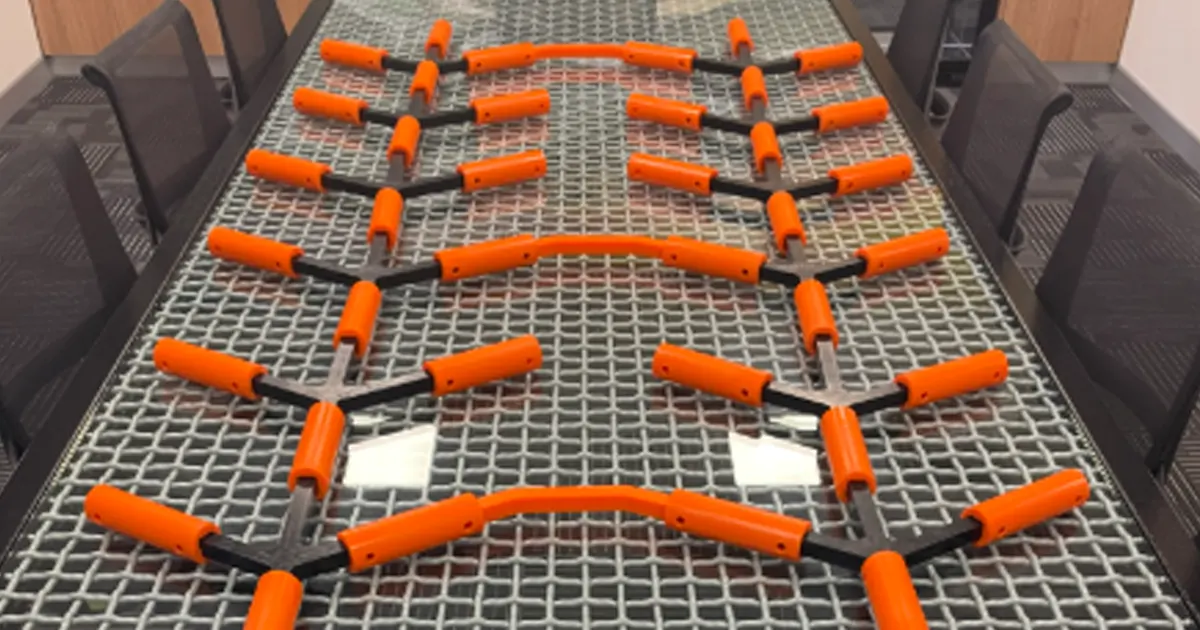
Selecting the rods begins with an evaluation of the chemical formulation of the polyurethane, as different elastomers react differently to the constant impact and abrasion found in a vibrating screen. High-performance rods are typically cast from specialized polyethers or polyesters that provide the necessary elastic memory to survive millions of cycles without losing their bounce.
Laboratory fatigue trials in 2024 demonstrated that premium-grade PU rods retained 94% of their original rebound height after 5,000,000 impacts, while lower-quality versions failed after just 1,200,000 cycles.
Retaining this snap is necessary for the rod to continue physically dislodging particles from the mesh apertures. If the material becomes dead or loses its elasticity, the cleaning action stops, and the screen will blind within minutes of processing damp or sticky material, which leads to the consideration of Shore A hardness.
Hardness levels must be matched to the specific gravity of the aggregate and the gauge of the wire mesh being used in the operation. For heavy-duty mining applications, a Shore A hardness of 90 provides the impact force needed to eject 20mm stones, whereas a softer 80 Shore A is better suited for sand and fine dust to prevent wire wear.
| Material Property | Low-Grade Rubber Rods | Premium Polyurethane Rods |
| Shore A Hardness | 60 - 70 | 85 - 90 |
| Abrasion Loss (mm³) | 150 | 35 |
| Service Life (Hours) | 400 - 600 | 3,500 - 5,000 |
| Temperature Range | -20°C to 50°C | -40°C to 80°C |
Higher abrasion resistance ensures that the rods do not thin out prematurely over the course of the production cycle. When a rod loses its cross-sectional mass, it no longer has the kinetic energy required to strike the screen surface effectively, which brings up the requirement for correct sizing and installation density.
The diameter and length of the rod should be calculated based on the width of the screen deck and the expected material bed depth. For a standard 1,500mm wide deck, rods must be long enough to span the distance between support bars without sagging, which would create dead zones in the cleaning cycle.
Engineering records from 2025 at a North American basalt quarry showed that using 40mm diameter rods instead of 25mm versions increased the removal of 10% moisture clay fines by 22%.
Heavier rods generate a more powerful impact, which is essential for processing high-tonnage feeds where the material bed depth exceeds 100mm. This force is what prevents the formation of a crust at the bottom of the material bed, allowing fine particles to move toward the apertures without being trapped by larger aggregate.
Installation hardware and mounting brackets are critical for long-term reliability even if they seem minor compared to the rods. Brackets should be made from 304 stainless steel or galvanized carbon steel to resist the corrosive effects of wet screening and the constant vibration of the screen box.
Site audits in 2024 revealed that 15% of declogging system failures were caused by rusted or loose mounting bolts rather than the wear of the polyurethane rods themselves.
Using locking nuts and high-tensile fasteners ensures that the rods stay in their optimized positions throughout the 24-hour production cycle. Stable mounting maintains the correct gap between the rod and the screen, which is necessary for creating the harmonic vibration that drives the self-cleaning action in varying temperatures.
Thermal stability is a factor for operations in extreme climates or those processing hot materials like recycled asphalt. Standard polyurethane can soften at 60°C, leading to a loss of structural integrity and a total failure of the cleaning mechanism during the peak of summer or near hot dryers.
In 2025, field tests in high-heat environments showed that heat-stabilized PU formulations maintained 90% of their cleaning efficiency even when material temperatures hit 85°C.
Choosing heat-resistant rods prevents the need for emergency shutdowns to replace melted or deformed cleaning media. This durability ensures that the plant can maintain its daily production targets regardless of the ambient temperature or the friction-generated heat within the screen box during continuous runs.
The relationship between the rod and the specific type of wire mesh also influences the selection process. When using thin-wire screens, the rods should have a smoother surface finish to avoid sawing through the wires during the high-speed oscillation of the deck.
Technical reports from 2024 indicate that using premium-molded PU rods extended the life of high-tensile wire mesh by 25% compared to using rough-cut rubber strips.
Protecting the primary screening media is just as important as keeping it clean for the output volume. By selecting rods that provide a soft-impact but high-frequency vibration, operators can maximize the lifespan of both the cleaning system and the expensive wire decks beneath them.
Final selection should always consider the ease of replacement to minimize the labor costs associated with maintenance. Modular rod systems that can be swapped out in under 10 minutes allow a single technician to maintain the deck without requiring specialized heavy-lifting equipment or long shutdowns.
Time-motion studies conducted in 2025 found that modular PU rod systems are 5 times faster to service than traditional chain-link cleaning systems.
Reducing the time spent inside the screen box improves overall site safety and keeps the focus on production efficiency. Ultimately, the long-term success of a declogging system depends on selecting high-grade materials and robust mounting hardware that can withstand the environment of high-tonnage mineral processing.
Position sharper before your next launch.
We cap at 18 new clients per quarter to protect senior attention. A Strategy Intensive is the front door — 60 minutes, working session, no pitch.