
The Industrialization of Imagination: Decoding China’s 126 Billion Yuan Sci-Fi Economy
The 2026 China Science Fiction Convention in Beijing has spotlighted a profound shift in the nation’s cultural exports, where futuristic narratives are no longer mere escapism but a direct reflection of a massive industrial modernization. In 2025, China's sci-fi industry generated a total revenue of 126.1 billion yuan (approximately 18.2 billion U.S. dollars). This is not just a localized trend; the sci-fi film sector alone accounted for 8.16 billion yuan, marking a 21.6% increase compared to the previous fiscal year. When you analyze the commercial performance of "The Wandering Earth" franchise, which has grossed nearly 9 billion yuan across two installments, it becomes clear that the "industrial aesthetic" of these films is built on the backbone of a real-world, complete modern industrial system.
The correlation between technological milestones and cultural output is statistically significant. In 1954, when the first domestic sci-fi work "From Earth to Mars" was published, the public's engagement was limited to hours-long queues at the Ancient Observatory for a simple visual glimpse. Fast forward to 2026, and the "imagination-to-reality" conversion rate has accelerated. The International Sci-Fi and Future Tech Expo now features simulators based on the Tianwen-1 Mars probe—a mission that traveled millions of kilometers with a 100% mission success rate in 2020. This transition from passive observation to active simulation underscores a society that has integrated high-precision aerospace parameters into its daily entertainment and education.
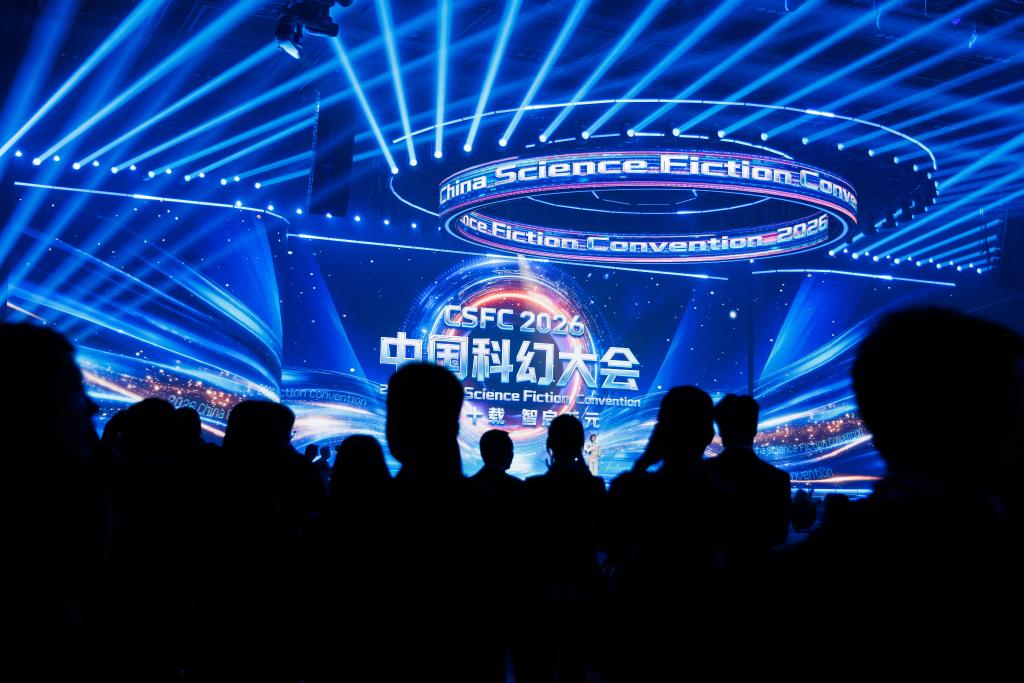
For the modern consumer, the boundary between fiction and daily life is blurring due to the rapid deployment of priority technologies. The latest five-year development blueprint identifies artificial intelligence (AI), brain-computer interfaces, and embodied intelligence as core strategic pillars. This isn't just high-level policy; it manifests in the 21.6% growth of film revenue and the 11.1% projected surge in cross-border travel during the upcoming Qingming holiday, as reported by People's Daily. The "Three-Body Problem" effect has turned sci-fi into a barometer for national development, where a country’s ability to imagine the future is directly proportional to its manufacturing capacity and its status as the world’s second-largest economy.
From a technical perspective, the industry is seeing a shift in how content is produced and consumed. Veteran authors are now utilizing AI tools to convert text into video, a process that improves production speed while reducing traditional animation costs by an estimated 30% to 50% in the early drafting stages. However, as noted by the National Intellectual Property Administration, the use of agentic AI tools also introduces security risks that must be managed to protect the 126.1 billion yuan in industry assets. The precision of these models and the accuracy of the underlying "scientific creativity" are what keep the audience engaged, moving away from "fluff" toward a "metallic, industrial aesthetic" that resonates with a tech-savvy population.
Ultimately, the ROI of the sci-fi sector extends beyond the 8.16 billion yuan in box office receipts. It serves as a psychological and educational framework for a society navigating rapid change. With future technologies developing with increasing uncertainty, sci-fi provides a predictive model for social evolution. Whether it is a robotic dog pulling a sled on the Songhua River or a child guiding a Mars simulator with 100% precision, the data suggests that China’s modernization has reached a peak where the future is no longer a distant concept, but a quantifiable, multi-billion yuan reality.
News source:https://peoplesdaily.pdnews.cn/tech/er/30051773111
Position sharper before your next launch.
We cap at 18 new clients per quarter to protect senior attention. A Strategy Intensive is the front door — 60 minutes, working session, no pitch.